
"Nobody told me my skin would change like this."
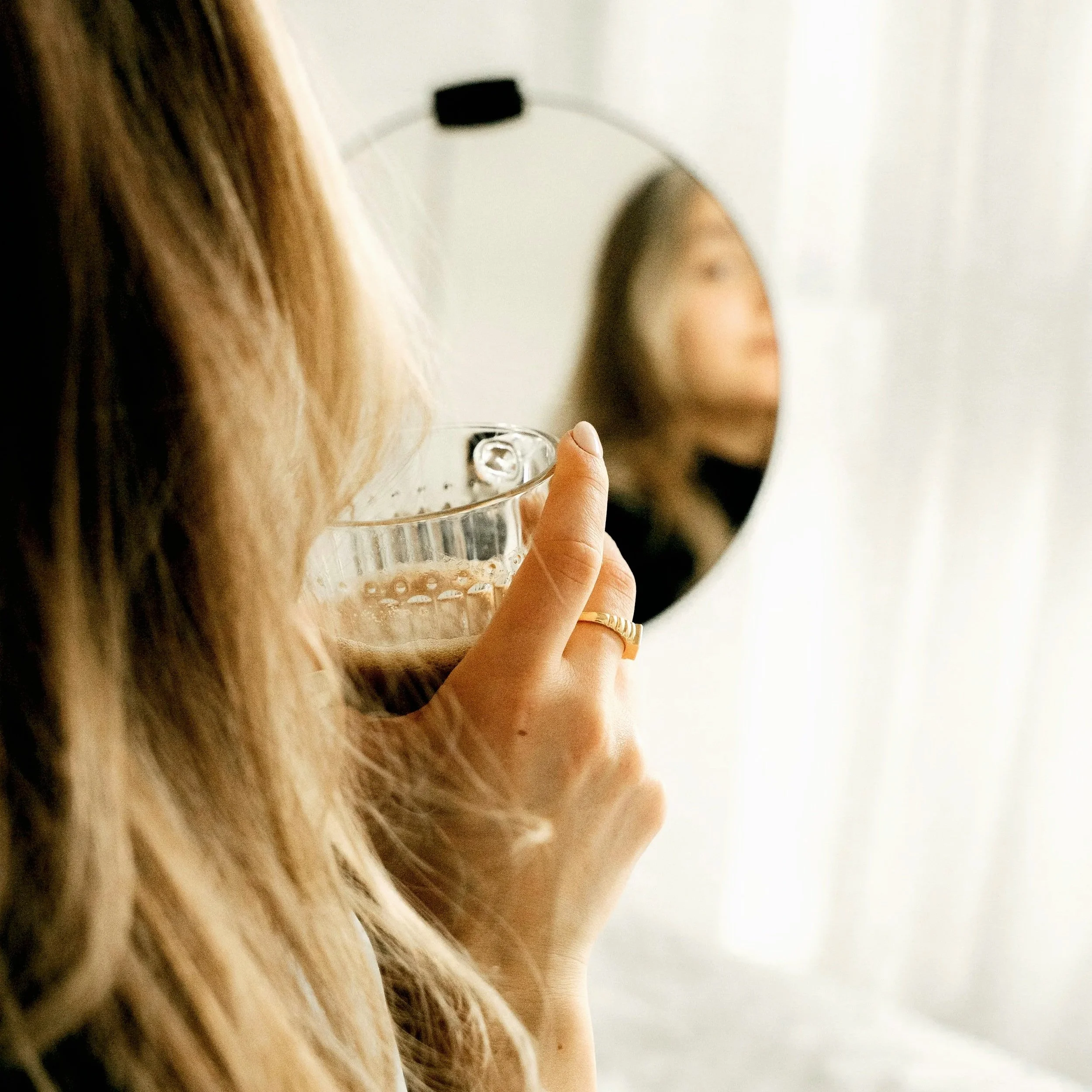
It's a Tuesday. Nothing special. She went to bed at a sensible hour, slept right through, and woke before the alarm feeling properly rested for once.
Coffee on, radio humming, she heads to the bathroom to get ready. The light through the window is soft and kind. She leans in towards the mirror the way she has a thousand times before, and pauses.
The fine lines around her eyes are still there. Not the creases from the pillow that fade by the time the kettle boils, but the ones that seem to have quietly moved in. The skin beneath her eyes looks a little thinner, a little shadowed. She feels wide awake. Her eyes, somehow, look tired.
She tilts her head, presses a fingertip gently to her cheek, and thinks: nobody told me my skin would change like this.
If that moment feels familiar, you are far from alone. For many women, this is where the first gentle changes begin to show, and those first fine lines can appear as early as our late twenties. And it isn't your imagination, your pillow or your moisturiser. It's your skin's natural rhythm of change: collagen slowing with time, and later on, hormones joining the conversation.
What's really happening beneath the surface
Hormones and skin are in a lifelong conversation, and perimenopause turns up the volume. Oestrogen, in particular, is one of your skin's best friends. It helps keep collagen production ticking along, supports hydration, and keeps the skin's protective barrier strong.
As oestrogen levels start to fluctuate and then fall, often from our early to mid forties, the skin notices. Here's what tends to shift:
Collagen slows down. Collagen is the scaffolding that keeps skin firm and bouncy. Its decline speeds up in the first few years after menopause, which is why lines can seem to appear almost overnight.
Hydration dips. Skin holds on to less moisture, so it can feel tighter, look duller and show fine lines more readily.
The barrier gets more delicate. You might notice new sensitivity, redness, or products you've used for years suddenly stinging.
Skin becomes thinner. Less plumpness means light reflects differently, and shadows sit where they never used to.
None of this is a flaw or a failing. It's a natural chapter, and like any chapter, it simply asks for a slightly different approach.
Why the eyes often show it first
The skin around your eyes is some of the thinnest on your body, with very few oil glands to keep it cushioned. It's also one of the hardest-working areas of your face: every smile, squint and blink is a tiny workout.
So when collagen and hydration start to dip, the eye area is usually the first to tell the story. Fine lines linger, the under-eye can look hollow or crepey, and darkness becomes more visible through thinner skin. That's why so many women describe looking tired even when they feel anything but.
What you can actually do about it
The good news? Skin is wonderfully responsive at every age. A few small, consistent habits make a real difference:
Be gentle. Use gentle cleansers that don't strip the barrier.
Feed hydration. Look for hyaluronic acid, ceramides, and layer a richer moisturiser in the evenings.
Introduce actives slowly. Retinoids and peptides support collagen, but start low and build up, especially if your skin has become more sensitive.
SPF, every single day. UV is the biggest outside cause of collagen loss, rain or shine. Yes, even in a London October.
Treat the eye area as its own zone. A dedicated eye cream, applied with your ring finger, and a little extra care at night.
Look after the whole you. Sleep, water, protein and stress all show up on the skin. And if symptoms are affecting how you feel day to day, a menopause specialist can help you explore the support that's right for you
Home care is the foundation. But when you'd like a little more support, that's where in-clinic treatments come in.
In the clinic this month: Mesotherapy Eyes with Jalupro Young Eye
This month, we're shining a light on one of our favourite treatments for exactly this moment: Mesotherapy Eyes with Jalupro Young Eye.
Rather than filling or freezing, Jalupro Young Eye works with your skin. It's a blend of amino acids, the building blocks of collagen, alongside hyaluronic acid for hydration. Delivered in tiny micro-injections around the eye area, it helps encourage your skin's own collagen renewal from within.
The result is gradual and natural-looking: skin that looks smoother, firmer and more refreshed, with softer fine lines and a brighter under-eye. In short, eyes that look as rested as you feel.
Every treatment begins with a consultation, so we can understand your skin, talk through what's realistic and build a plan that suits you.
For the whole of October, enjoy 10% off Mesotherapy Eyes with Jalupro Young Eye.
A gentle note to finish
Your skin isn't letting you down. It's changing, just as you are, and it deserves the same patience and kindness you'd give a friend going through something new.
So the next time you catch yourself in the mirror thinking nobody told me, consider this your sign. We're here to talk it through, with honest advice and no pressure.
Book your consultation at skinor.co.uk and enjoy 10% off Mesotherapy Eyes, our little gift to you this month.